Dick Davis, preeminent translator of Persian literature and professor emeritus at Ohio State University, says that events that happen within a culture are like vodka snuck into a bowl of punch: no matter now much you dilute the punch, the vodka is still there.
Davis goes on to talk about how for Iran, its conquest, first by the Arabs in the 7th century then twice by the Turks and twice by the Mongols – all of which happened within a few hundred years – fostered a cultural sense that “the wrong people are ruling the world.” And this comes out in its literature, its poetry. I recommend watching his whole lecture video above, it’s excellent.
It’s not hard to see the vodka-in-the-punch effect everywhere: slavery in the States, the Cultural Revolution and modern China. The bomb’s effect on Japan, which looms large in the background of so much manga. I prefer the vodka/punch analogy over, say, the analogy of a wound because the former suggests something much more pervasive, ever-present, less patched-and-healed-and-done-with. In 1805 the city of Detroit burned to the ground in a fire; this place will never not carry with it the idea of resurgence.
All this was on my mind driving down to Ohio a couple of weekends ago. Julia I went to catch, before it closed, the Maurice Sendak retrospective at the Columbus Museum of Art.
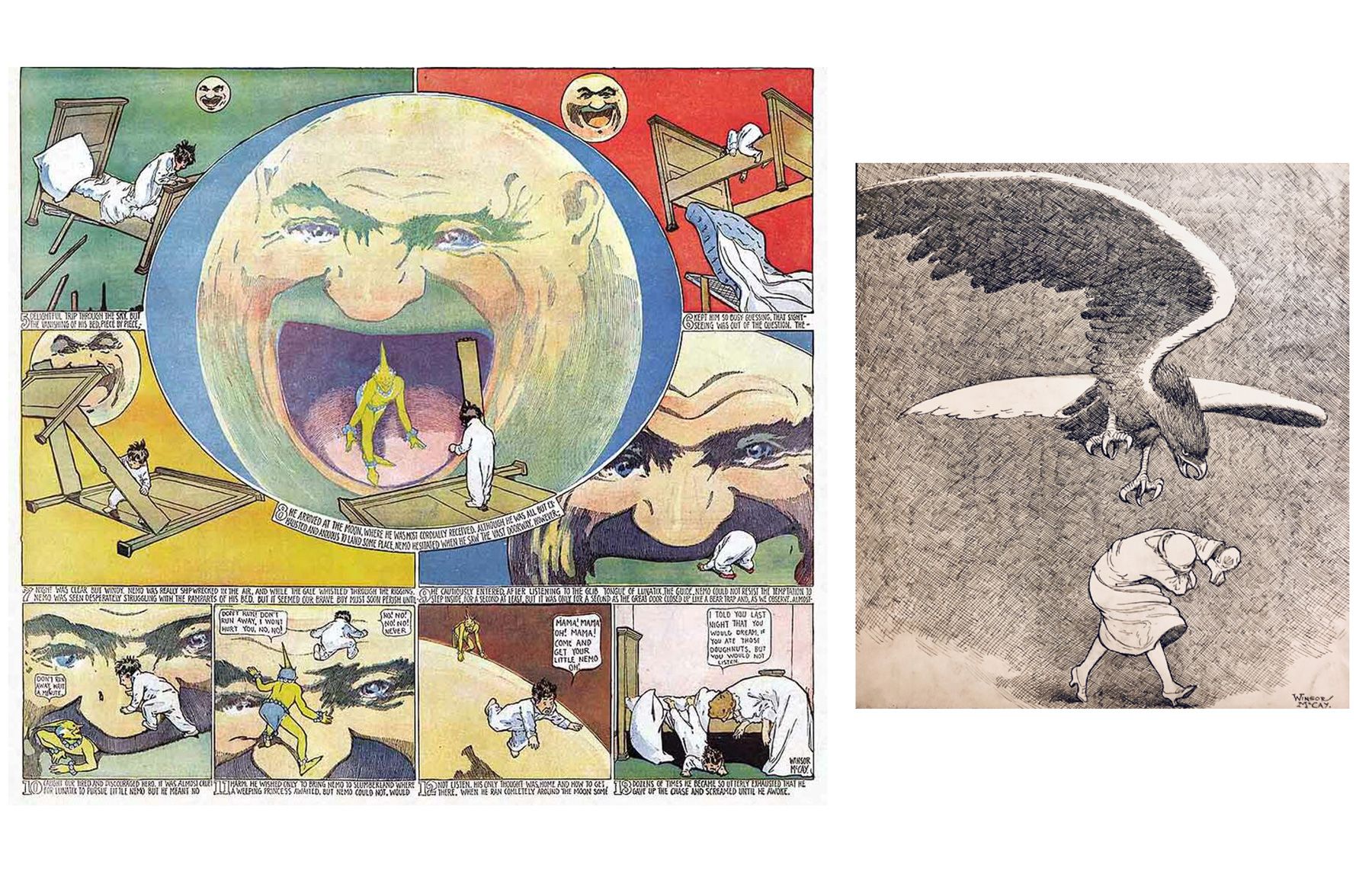
I’ve heard it said in different forms over the years, that as an artist you start by emulating the style of other artists you love, and it’s through this melding of loves that over time you arrive at your own style. Still, it was quite a different experience to see, side by side with Sendak’s own art, the art of some of his influences. Particularly because most people, myself included, think of Sendak’s art as so distinctive. I forgot to take photos of the exact works, but you can see, for instance, Winsor McCay’s sway on Where the Wild Things Are: