A milestone: I have a final title for the new book. And my editor informs me that they’ve found an artist for the cover. Both will be revealed … just not this week ;)
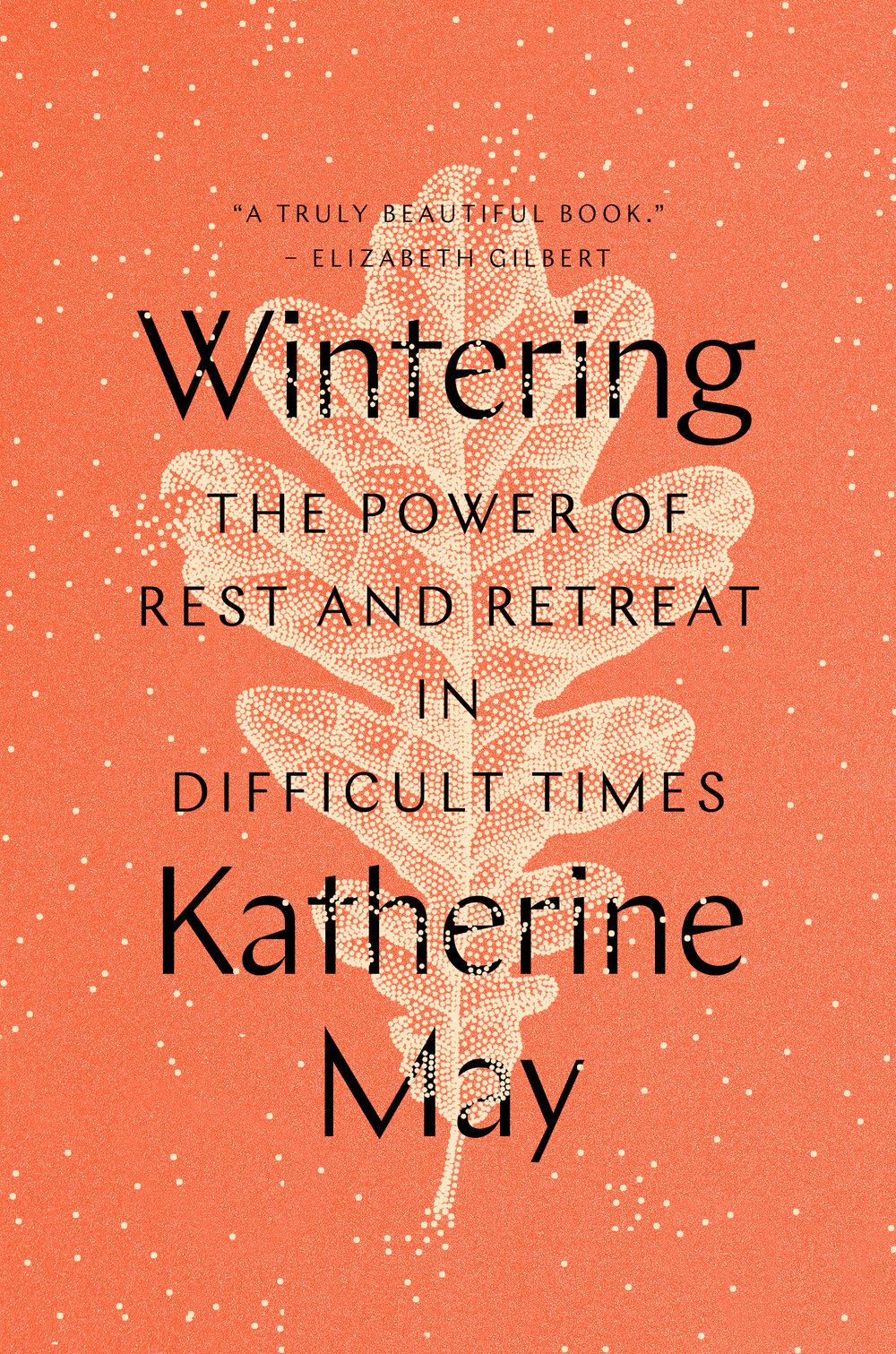
Instead, on this 80-degree day in Detroit, I want to talk about Wintering. You know I’m fond of the concept, but here I’m referring to Wintering (the book), by Katherine May. It came out in November 2020, and was one of the many titles I’d completely missed due to it being The Lost Year. I only first heard about Wintering last week through Kai Brach’s ever-excellent Dense Discovery newsletter, upon which I promptly dropped everything else I was doing.
I was there and ready for the book’s structure, organized by month from September through March. I devoured the ruminations on solstice and Samhain, sauna-ing and Iceland’s Blue Lagoon. And passages like this one:
Winter is a time of withdrawing from the world, maximising scant resources, carrying out acts of brutal efficiency and vanishing from sight; but that’s where the transformation occurs. Winter is not the death of the life cycle, but its crucible.
But the most delightful parts of my read were May’s impish meditations on creatures whom Western society has chosen to cast out – creatures like the wolf and the grasshopper. Here she upends the Aesopian fable, gets us to rethink the latter’s relationship to the ant:
[Ants] are a projection of how we so often think we ought to live, but also a model for a life we’ve collectively failed to achieve, over and over again, across the entire history of humanity. The ants are not real, not on a mass scale; they are an if only. If only everyone could be the ants. If only we were all so forward thinking and responsible. If only the grasshoppers of this world could be so simply dispatched.
I will give you an alternative if only. If only life were so stable, happy, and predictable as to produce ants instead of grasshoppers, year in, year out. The truth is that we all have ant years and grasshopper years – years in which we are able to prepare and save and years where we need a little extra help. Our true flaw lies not in failing to store up enough resources to cope with the grasshopper years, but in believing that each grasshopper is an anomaly, visited only on us, due to our unique human failings.