Victoria Song has a good overview in The Verge of the current surveillance/privacy/creepiness discourse around AI wearables (gift link):
[T]o be effective, they have to be discreet and, to a degree, covert. The Meta glasses and Vocci ring work because they’re easy to overlook. You feel comfortable wearing them, and you know you’re not being a privacy-invading glasshole. But this hinges on everyone assuming your good intent.
Spy gadgets achieve discretion by purporting to be what they are not: a pen, pin, or leather handbag with a lens-sized hole cut into its side. But spy gadgets also aren’t designed to do anything other than spy, which is part of what what makes wearables a subject of “discourse” instead of flat-out heinous.
But this confusion of intent, to me, also makes typical AI wearables even creepier than spy gadgets. There’s a certain disgust that arises when what has a clear and familiar purpose (e.g. a pair of glasses) starts to do something other than what you expect it to do – as if possessed.
As someone who makes a quick capture notes app, I’m tempted by the idea of a voice-note-taking ring. Of something I can talk into but doesn’t talk back and isn’t a pocket slot machine or a screen half an inch from my eyeball.
It doesn’t need to be a ring. Pins and pendants are a little better; my expectations of those tend to be more inert than a pair of glasses. But they’re still dishonest in their own way.
Maybe what I want is an AI voice recorder that is still legible as a voice recorder. Think: A Sony Pressman, or the Starlite RA-11 reel-to-reel tape recorder used in the film Peter Hujar’s Day.
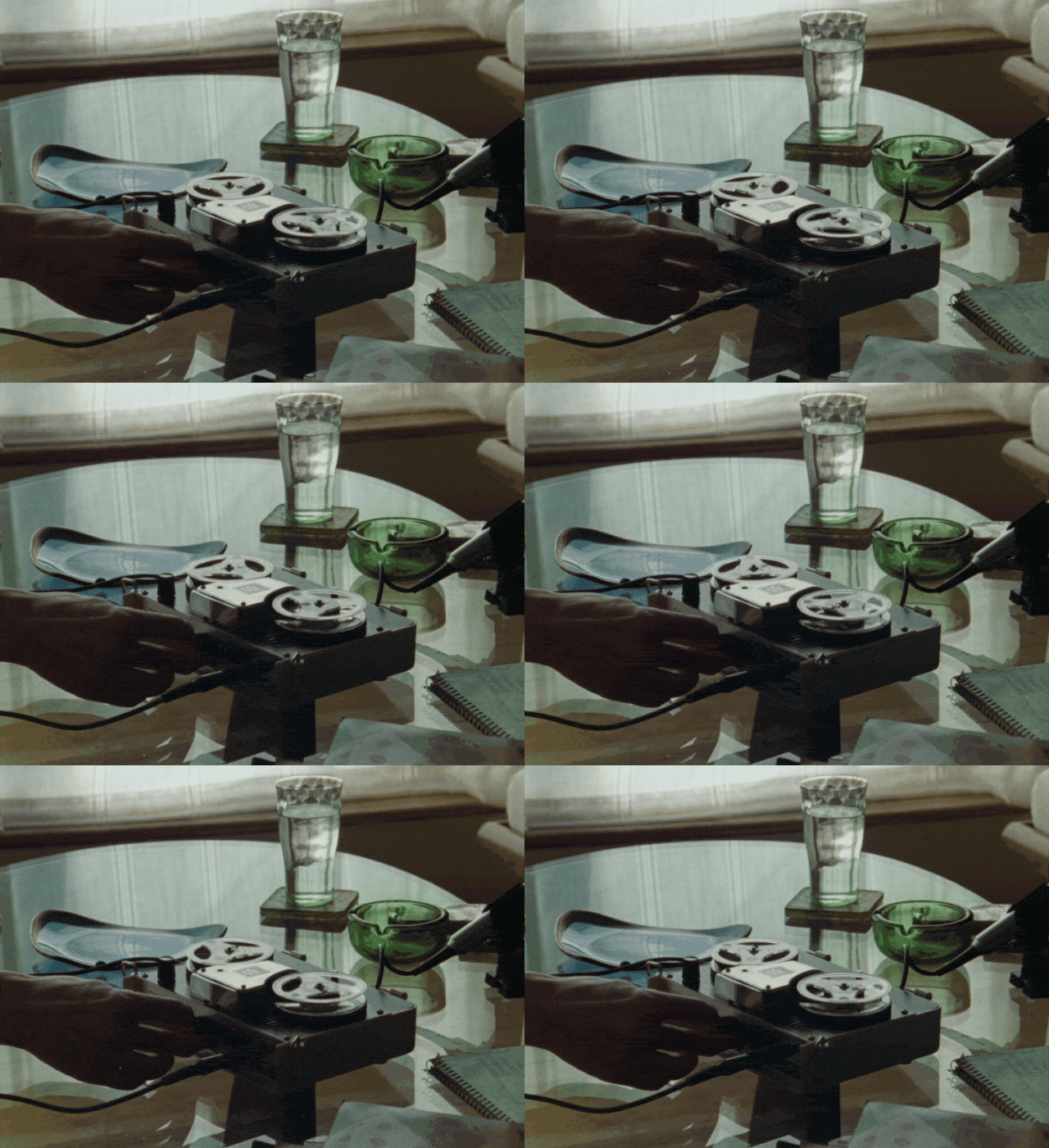
A device that still does what it purports by appearance to do, just with a little magic – as if enchanted.