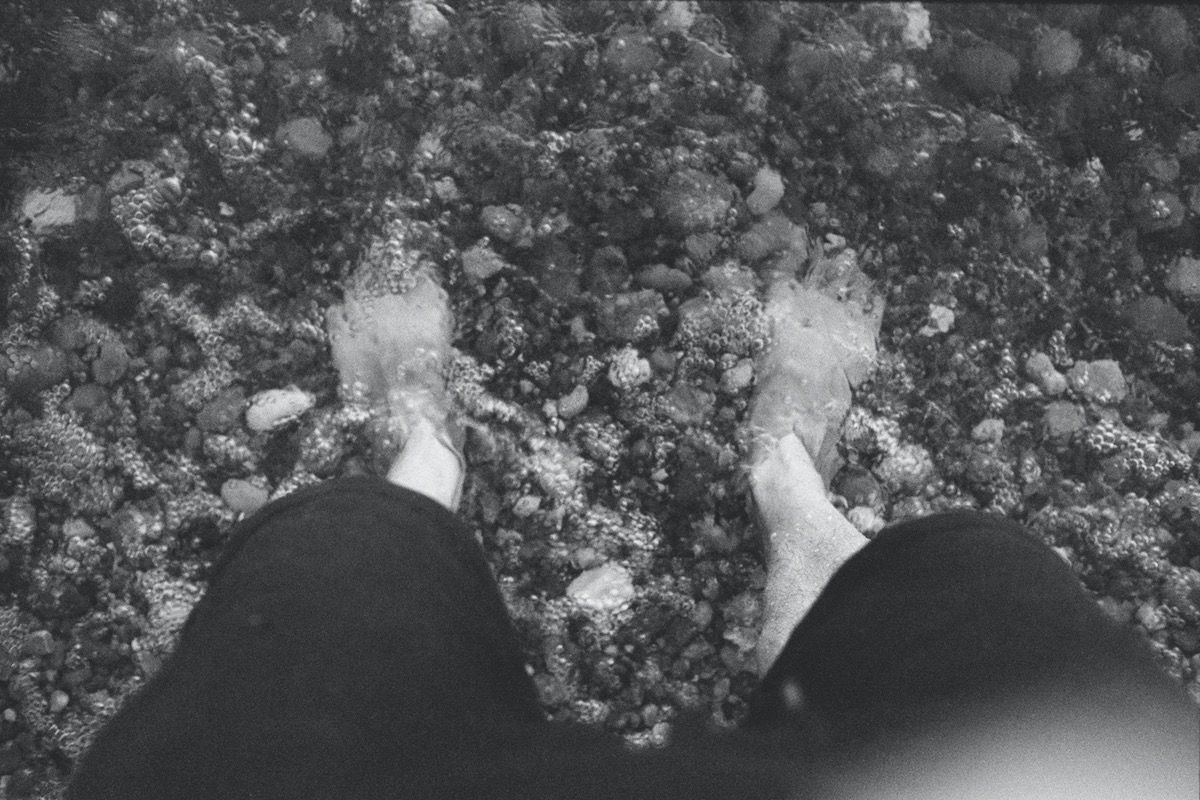
We went on an unplanned retreat last week, due to Julia catching a brief stomach bug. Her Covid test came back negative, but the hospital where she works mandates a precautionary ten full days off, even for a negative test. The friends who own the cabin I wrote to you from last time also happened to be away for two weeks; we were free to stay there again, they said. We gladly accepted.
We went for walks along dune trails, sat on rocky beaches on the edge of Lake Michigan, and I took Julia fishing for the first time. I wrote the same amount in the mornings but read a lot more in the afternoons, and it seemed fitting in a structure such as a cabin, where houseness is more evident than usual, to be reading about architecture. I finished Michael Pollan’s, A Place of My Own, about the building of a writing shed on his former property in Connecticut. The book connects so much of what I’ve mentioned in these letters, from The Poetics of Space to Christopher Alexander, and draws unexpected connections between writing and building with both a greater self-awareness and patience for historical research than I possess. If you’ve read any Pollan, you know he’s at his best when he places his own novice self, with humility and humor, at the threshold where human beings meet the natural world (and at the butt of the jokes). This book is a prime example. The edition I have includes a preface, too, in which he muses about second books:
I have a theory that a writer’s second book, which is what this one is for me, is the most difficult to write and the most revealing to read. To borrow a metaphor from geometry, a first book is like the point in the infinite space of literary possibility: it can be about anything and leads nowhere in particular […] But a writer’s second book, by forming a second point in the space of literary possibility, creates a line: a path or trajectory that very often sets the course of the writer’s career.